
„The development of sustainable packaging solutions is one of the top issues in our industry. A partnership in which both sides are seriously committed to this and pull together in the search for new concepts offers the best conditions for this. And so it is no coincidence that we can already boast a whole series of joint solutions in this field.
Jessica Gerst, Head of Packaging Development at Wernsing Feinkost GmbH
BUNDLED POWER FOR FUTURE-
PROOF PACKAGING.
A food producer and a packaging specialist who tick in the same direction when it comes to combining product protection, functionality, convenience and the attractiveness of packaging with greater sustainability: The close collaboration with Wernsing Feinkost shows what can be achieved. In the decades-long partnership, new, contemporary concepts have been developed time and again, which can be measured by continuous optimization along the entire process chain. The two companies have been working together for some time now to promote greater sustainability in packaging issues – and are therefore well on course to meet the upcoming EU requirements.
All requirements under one roof
Packaging development at Wernsing is carried out in close cooperation between production and marketing with the relevant packaging specialists - product safety has top priority. There is also a complex interplay of other aspects: The various production processes, e.g. deep-freezing, hot-filling or pasteurization, have to be taken into account, as do logistics issues. For example, it plays a decisive role in the design of the packaging whether it must later serve as a load-bearing element for the products on top of it during transportation on a pallet. This is where we come into play. Our big advantage: from design to series production, customers can obtain all process steps from a single source on request.
That's what an enthusiastic customer sounds like.
SPECIAL FEATURES OF
JOINT PACKAGING DEVELOPMENT.
In our view, the ideal packaging should combine maximum product protection with minimum use of resources—without neglecting the convenience requirements of end consumers, consumer protection, and the legal framework.
Development in accordance
with eco-design
For us, this means conserving resources by taking a holistic view of the entire manufacturing and supply chain—with the declared goal of implementing maximum product protection in a way that is as resource- and climate-friendly as possible. It is always important to find the best possible compromise in relation to the diverse requirements.
Technical evaluation
of pre-production status
Innovative development tools are used to turn a good idea into a series product. These include filling analyses, 3D simulations, and digital mock-ups (DMU). Rapid prototyping is a helpful step in evaluating a new development to determine whether it can be processed for use on existing filling systems.
Sustainable packaging.
Added value along the
value chain.

marco von Döllen
Sales Manager
- Single-material packaging: ideal for mechanical recycling (NIR detection, float-sink process).
- Resource-saving thanks to material reductions and optimal stackability and nestability.
- Quickly and cost-effectively create design, functional, and test samples with rapid prototyping and tooling.
We would be happy to present our advantages to you in a personal meeting.
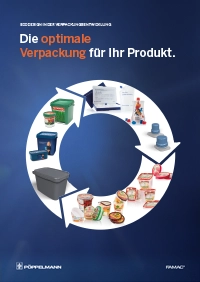
Product Folder
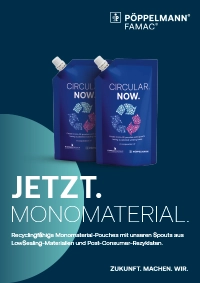
Spout Folder
PP blue Folder
Examples of sustainable packaging that combines cost-effectiveness and resource conservation.
Logistics optimization
In 2006, we replaced the traditional round buckets used for the 2 to 5 kg product range with our square buckets. Since then, pallets can be loaded with 24 buckets per layer, compared to 18 buckets in the round version – this corresponds to a 30 percent improvement in space utilization. The change has reduced the transport required to deliver the goods by around 310,000 kilometers per year, combined with fuel savings of around 100,000 liters per year.
Recyclability
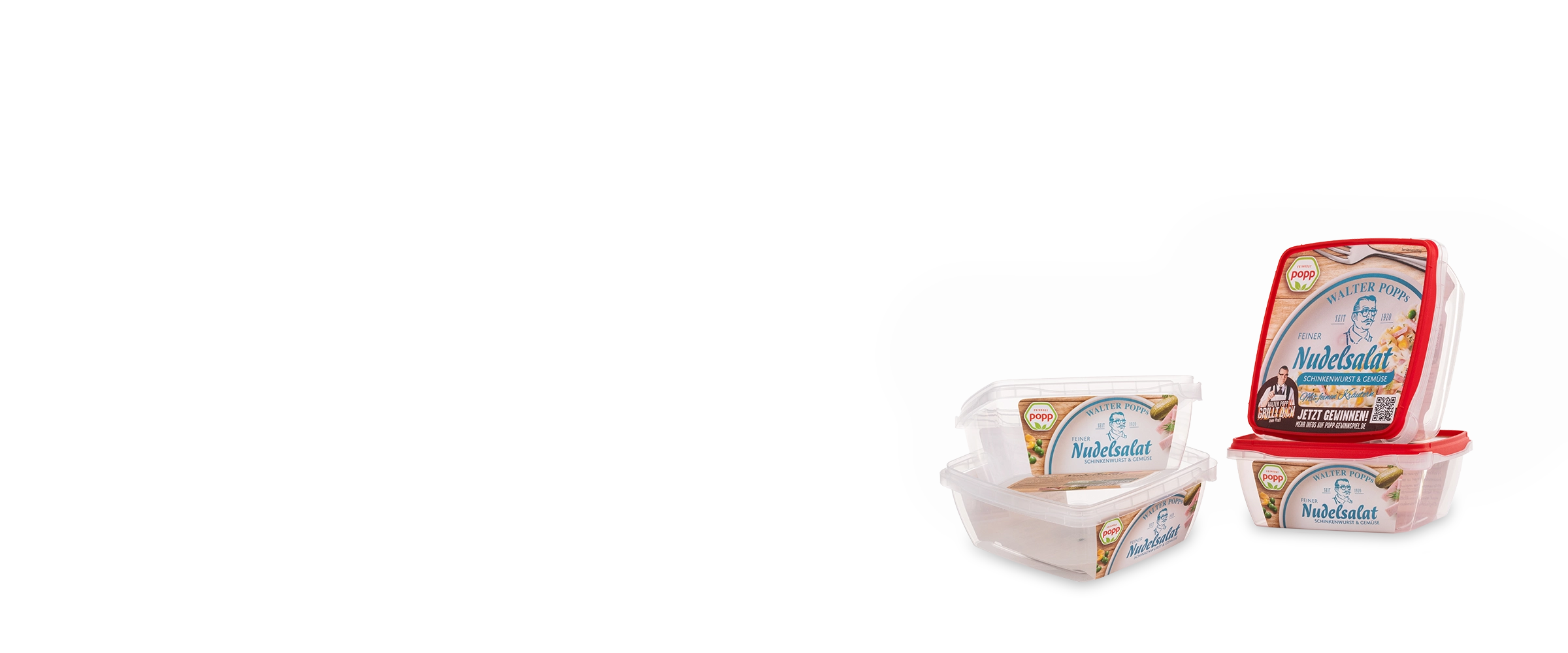
Currently, packaging development is focusing on converting existing packaging solutions to monomaterials in order to ensure complete recyclability. At Wernsing, packaging made from mixed materials or plastics that are difficult to recycle is therefore being gradually replaced by recyclable packaging, e.g., made from easily recyclable mono-PP. For example, the labels on the square cup range for delicatessen salads have been switched from paper to plastic.
Circular economy
The joint development work, aimed at responsible use of fossil resources, is far from complete with the switch to fully recyclable packaging. In the next step, we have set ourselves the joint task of reducing the use of plastics in our recyclable packaging as much as possible without compromising product protection.
What do we mean by
future-proof packaging?
The EU packaging regulation PPWR (Packaging & Packaging Waste Regulation) formulates the framework conditions for how packaging should be designed in the future. Unnecessary packaging and packaging waste should be reduced and reusable systems and recycling should be promoted. In our opinion, plastic packaging meets precisely these requirements, as plastic is more efficient than alternative materials.
Test without obligation: reusable cups from the FAMAC® program.
Request samples of our packaging for testing - of course, completely free of charge and without obligation.
Fill out the form now and receive a sample range.